
October 3, 2021
Reading the Psalms After Experiencing Life
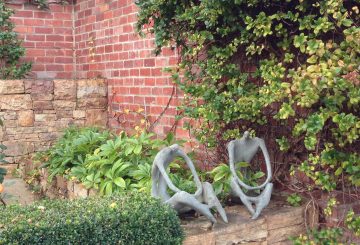
Peter Fitch read Psalm 34 and asked what a naive interpretation of this psalm might indicate. Then he showed a talk by Kate Bowler called “Everything Happens for a Reason, and Other Lies I’ve Loved.” Then he read Psalm 34 once more and asked people if they saw any deep truths within the psalm that still rang true after Kate’s talk. There were many rich comments. Music today was by Jacob Rose, including 3 original songs, and a couple of the songs were accompanied by Sarah MacPhail as she and her husband, Tim, were visiting from Germany.
September 26, 2021
Understanding the Impact of Anti-Feminist Theology on Women Today
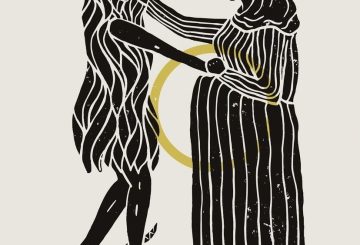
Today’s message was brought by Jessica Williams and we wish everyone who has ever attended a Christian church could hear it. Gracefully, and kindly, she leads us through some of the horrible comments that respected people in church history have made about women. Then she explains the four waves of feminism and shows why Christianity has made feminism necessary. Finally, she gives some instructions for a way forward. This is a brilliant talk. It affected the people gathered in such a deep way that it’s hard to explain. The music for today was also outstanding, led by Mayara Goncalves e Lima. There are two songs before the talk and one that follows. This last song was written by Mayara about the effects of colonialism in Brazil and around the world.
September 19, 2021
Finding Joy
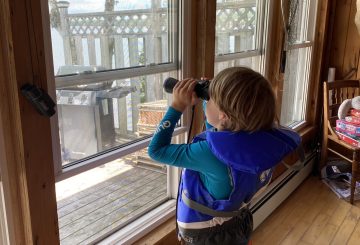
Peter Fitch asks questions about the nature of joy and whether or not we can learn to welcome its visits with greater frequency. He looks at ideas in the NT and then finds additional wisdom from other sources: Jimmy Santiago Baca, Kahlil Gibran, and the Tao te Ching of Lao Tzu. Joy is something that we fight for, that we rest into, and that we gain through participation and service to others. It has a rich connection with sadness and sorrow, and also with the kind of connection with the Eternal that allows one to be fully alive in the present moment.

September 12, 2021
Love: Acceptance and Invitation
With life being a bit full and poignant lately, Walter Thiessen felt the need to focus on what matters most – loving with acceptance regardless of hurts, disappointments and frustrations. And yet love also means believing in the value of inviting people to step up. So, we explored how that invitation can happen without doubting the love.

September 5, 2021
42nd Wave
Today, Zoe Fitch shares a few portions of her recently completed novella, 42nd Wave, and speaks about the things that this particular writing project has had her thinking about, researching, and dreaming into hopeful-existence.
Here’s a synopsis of the story:
When pandemic and climate restrictions are eventually combined, the burning of fuel is made universally illegal. With nowhere to turn but to each other, the citizens in the smalltown of St. Stephen, New Brunswick and the surrounding Ridges must work together to hacksaw a path toward harnessing and protecting their sustainable in-Region resources.
August 29, 2021
What Does God Want?
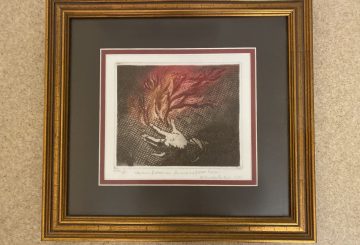
Today Peter Fitch went over the Values Section of our church website in order to discuss the postures that we have decided should be hallmarks of our community. Along the way, he contrasted the humility and kindness he hoped we could consistently show to each other with terrible moments in church history. Somewhere along the way, Christianity became very different than it might have been if it had followed the teachings of Jesus more closely. Peter thinks it’s important to be honest about the problems if we ever hope to find a better path.

August 22, 2021
SCC Values
Today Peter Fitch went over the Values Section of our church website in order to discuss the postures that we have decided should be hallmarks of our community. Along the way, he contrasted the humility and kindness he hoped we could consistently show to each other with terrible moments in church history. Somewhere along the way, Christianity became very different than it might have been if it had followed the teachings of Jesus more closely. Peter thinks it’s important to be honest about the problems if we ever hope to find a better path.

August 15, 2021
Thoughts
Peter Fitch asks people what insights they can glean from several Scriptures or famous quotes about living a good life. The responses are lovely. Then Peter reads from a story by Fredda Paul, residential school survivor, about happy memories associated with his childhood home. This seems to add another dimension to the idea of “reverberating joy” that emerged through the first part of the service. The Presence of God in everything lends itself to the idea that the world is on fire in a perpetual, but not destructive, way.
August 8, 2021
Historical Ramblings
Peter Fitch shares some of the fascinating symmetry that connects Martin Luther, leader of the Protestant Reformation, with St. Martin of Tours, the person he was named after, and also with one of the darkest moments of the Holocaust. Somehow, it seems as though both Light and Darkness are dancing around the world-shaking events of the 16th century. Peter doesn’t know how to understand these things but he finds them fascinating and thinks they hint at a more complicated flow in history than we normally imagine.
August 1, 2021
Front Streets and Backyards
Zoe Fitch sings three new songs that she has written and, in one of them, she makes the comment that people might go down our front street and think nothing is happening here. However, that would be a complete mistake because there is so much going on in people’s backyards. There is gardening and crafting and many forms of “making.” This fits very well with Peter’s talk for today. He brings a story from the New Testament and follows with an article about New Zealand from the BBC. Sometimes people put their trust in systems of understanding that really don’t help, like the woman who felt like an outcast for 12 years with internal bleeding. The doctors of her day couldn’t help her but touching Jesus’ outer garment did. She reached toward the place of best energy and it changed her life. Jacinda Ardern apologizes to Pacific Islanders for a past injustice, and it seems like she, too, is reaching toward the place of best energy.
July 25, 2021
What’s in the Way?
Walter read Ephesians 3.14-19 and shared a paraphrase of this beautiful prayer. We then spent some time asking “what gets in the way?” of receiving the fullness of this prayer. After sharing some answers out loud, we did some silent reflection while re-reading the passages and shared a bit more. See the handout for the paraphrase and the exercise.
July 18, 2021
Jonathan’s Legacy
Today we carried on from last week with more stories by Fredda Paul, Indian Residential School survivor, and Leslie Wood. Once again the stories centered on Fredda’s friend, Jonathan, and once again it was special. In this reading we learned of Jonathan’s death at the school but we also learned about the ways that his life has continued to influence Fredda. Peter Fitch, who read the stories, shared his desire to appreciate life after death through Indigenous perspective. Music at the beginning of the service was by Raymond Funk and the poem that followed was by Jessica Williams.