Speaker: Peter Fitch

Touching Life

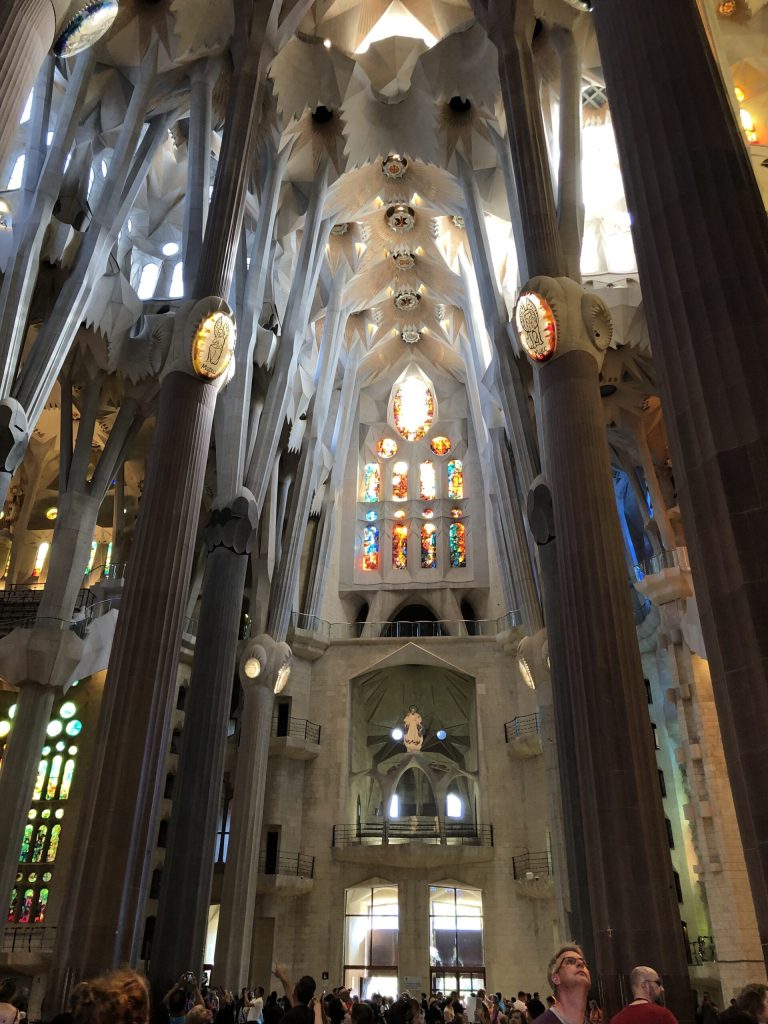
Peter Fitch continues to ask questions based on John, chapter 1. If Jesus is the perfect blend of humanity and divinity, of Spirit and matter, what does this mean for us? What is it like to be too focused on spirit? What is it like to be too focused on matter? How do we achieve the blend that Jesus modelled for us? Sacraments and Gothic Cathedrals speak of the need to bring the two realms together, as do the philosophies of Plato and Aristotle, but the best example is probably a human being submitted to God and flowing with the Spirit in order to bring justice and compassion into his or her surroundings.

Read More

What Matters?

Peter Fitch continues the discussion from last week regarding the Gospel of John and the Gospel of Thomas. If both have beautiful and important things to say, is it possible to bring the best points together? Is a synthesis possible? To explore this further, Peter asks everyone to spend a few minutes in silence, thinking about the meaning of John, chapter 1, verse 1. What is meant by “the Word”? Behind it all, there seem to be questions about matter and spirit. How are they married in Jesus, and what should our posture be like? Should we concentrate on spirit, drawing bounds of exclusion with those who don’t share our interest or belief, or should we ignore spirit in our quest to be comfortable and, perhaps, some of the richest part of the human experience?

Read More

A Big Question

Peter Fitch retells some of Elaine Pagels story and shows why she values Christianity and, at the same time, finds things within it with which she cannot agree. He wonders if there is a way to bring together a traditional understanding of the Gospel of John with the things that she finds beautiful in the Gospel of Thomas. Is Jesus to be seen as God or as a Jewish teacher who has come to help each of us learn how to develop the image of God in which we all share? Is he, perhaps, both? Either way, Peter thinks there is a value to divergent knowledge and looks for a richer way of understanding than he has had to this point. 

Read More

Not of this Fold

Peter Fitch discusses the metaphors that Jesus uses in John, chapter 10. He is the Gate and He is the Good Shepherd. Then Peter focuses on verse 16 where Jesus says that He has other sheep, “not of this fold.” This leads Peter to speculate about who these people might be. One candidate, he thinks, is Rumi, the 13th century Turkish Sufi master, and he reads two brilliant poems, The Great Wagon and Moses and the Shepherd, to illustrate this thought

Read More

Rights?

Peter Fitch wonders how to bring together the teaching of Jesus and St. Paul that we ought to live as though we had no rights while at the same time trying to respond to oppressive systems by advocating for justice. He finds great wisdom in Dr. Martin Luther King’s “Letter from a Birmingham Jail” (April, 1963) and also in a recent documentary at Toronto’s Hot Docs Film Festival called Faceless, about the courage of young protestors in Hong Kong.

We began this service by listening to Art Garfunkel singing “Bridge Over Troubled Water” in a concert at Central Park. We finished by listening to Patty Griffin sing “Up to the Mountain”, a song she wrote to honour Dr. King.

Read More

Door to Life

Peter Fitch examines the parable of the Wedding Banquet from Matthew 22. It seems harsh at first reading. Peter wonders whether historical context played a role in this. Then he looks at it through the eyes of Peter Rollins, who sees in it an invitation to a new community without hierarchical divisions based on ethnicity, economics, or gender. Finally, Peter Fitch wonders about this parable as an invitation to come to the table with all that we have, embracing the rich and important moments of life.

Read More

Glorious Day!

Peter Fitch used songs from various bands and choirs as icons for us to remember our need to fix ourselves and our broken societies, the blend of human giftedness and divine need, how important it is to stand against hate crimes afflicting Asian people, our indebtedness to healthcare workers, and the glory of Easter. His talk focused on St. Paul’s prayer in Ephesians 1, that we would know the hope of Christ’s calling, the riches of His inheritance, and the surpassing power that is available to us to grow in life and to stand for just causes. The last part of the talk comes from St. Julian of Norwich who believes that we would be changed forever if we could see the joy in Christ’s face and His love for us.

Read More

Willing?

Peter Fitch expressed his view that Palm Sunday is a great reminder of the need for discernment. There is more than one way to think about God and what “the good” might look like. People welcomed Jesus into Jerusalem but turned on Him soon after that. Behind it all are questions about the nature of God. Peter next looks at the story of the leper who wants to know if Jesus is willing to heal him and, after that, he turns to a story about Brother Masseo, one of the original Franciscans, as he discovers that God’s willingness is different, and better, than he could have imagined. 

Read More

Pure Heart

Peter Fitch introduces Hildegard of Bingen (1098-1179), a genius and polymath whose prophetic wisdom was sought by kings and queens during the 12th century. She is gifted in theology, science, herbal knowledge, medicine, music and art. Her views seem strange to us, however, because they come through her medieval lens and understanding. This leads Peter to ask questions about the illusions we carry today and whether or not we can ever expect to get an understanding of something that hasn’t been tainted by our own worldviews and values. Speculating about this results in a new way of looking at Jesus’ words in Matthew 5: “Blessed are the pure in heart for they will see God.”

Read More

Heaven

This Sunday Peter Fitch spoke on the first anniversary of St. Croix Church, the name that we took as we morphed away from our denomination a year ago this weekend. He chose to speak on Revelation 21 and 22, seeing the description of the new Jerusalem as an ancient means of encouragement for people who were undergoing persecution and oppression. As such, it works in a similar way for us. Instead of hopelessness in the face of challenges, we can be confident in the Spirit of God’s Presence, bringing comfort and creativity as we walk through life together, always pushing toward kindness and justice.

Read More
More on this topic